A confidential document shouldn’t need to make a tour of the office before it reaches the shredding bin. Yet when the nearest container is tucked into a distant storage room, it’s easy for paperwork to sit on a desk “until later.”
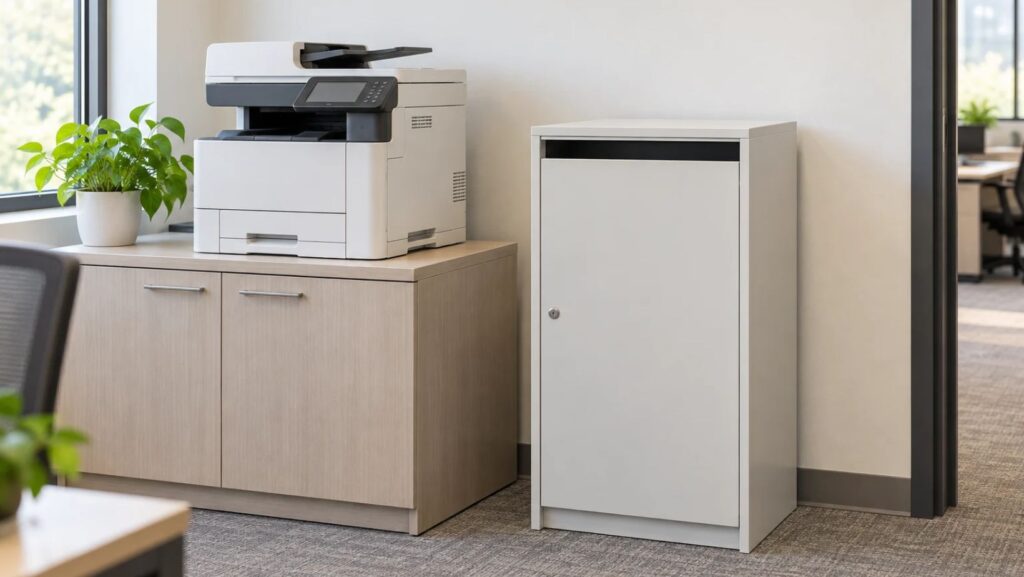
Secure shredding bins should be placed in accessible employee work areas near where confidential paperwork is handled, away from unrestricted visitor access and without blocking walkways. The right arrangement makes disposal convenient, while protecting documents between collections.
Whether you manage a small Charlottesville office or several departments in Richmond, start with how your team uses paper each day.
Why Shredding Bin Placement Matters
Having a locked bin gives employees a designated place for paperwork approved for destruction. But location affects whether they use it consistently.
A container that requires a trip to another floor adds an unnecessary step. A bin hidden behind supplies may be overlooked. Both can encourage documents to accumulate on desks or end up in ordinary recycling.
Good placement supports confidential document disposal by making the secure option easy to reach. Employees also need to know which records are ready for destruction. A convenient bin shouldn’t become a shortcut around your retention policy or destruction approvals.
The Best Places for Secure Shredding Bins in an Office
Look at where employees finish using sensitive paperwork, and choose locations that are easy for staff to reach, while limiting visitor access.
Here are some of the most common places to put secure shredding bins in an office.
Near Printers and Copiers in Employee Work Areas
Printing mistakes and duplicate copies can contain the same private information as the finished document. A bin near a staff printer lets employees dispose of those pages promptly.
Place it where the paper slot is easy to reach, without blocking equipment, cabinets, or walkways. If the printer is in a visitor-accessible area, choose a nearby staff-only location instead.
Remind employees that a shredding bin doesn’t solve the problem of confidential printouts left in the output tray. Those pages still need prompt collection.
In Accounting and Human Resources Work Areas
Accounting and HR teams regularly handle payroll details, employee information, and financial records. A dedicated container can make sense when these departments generate enough disposal material to justify one.
Position it within the department’s existing access restrictions. Employees shouldn’t have to carry sensitive paperwork through a public area simply to discard it.
For example, an HR workspace with controlled access may be a better location than the corridor outside its door.
Near Shared Administrative Workspaces
A centrally located container can serve employees who produce smaller amounts of confidential paperwork. Choose a staff area along a normal work route, rather than a remote corner.
In a smaller office, one shared bin may be sufficient if everyone can reach it easily. Make its purpose clear, so employees can distinguish it from ordinary waste and recycling containers.
Locations to Avoid When Placing Shredding Bins
An empty corner isn’t automatically a suitable collection point. Avoid placing office shredding bins in:
- Public lobbies and waiting rooms: These areas give visitors easy access to the container. Even when it’s locked, placing it in a staff-only area reduces the risk of tampering or unauthorized attempts to access confidential documents.
- Doorways and narrow walkways: Bins shouldn’t obstruct movement, emergency exits, or access to equipment.
- Areas exposed to leaks or moisture: Keep containers away from conditions that could damage them.
- Inconvenient storage rooms: A location employees rarely visit can encourage paperwork to accumulate elsewhere.
How Many Shredding Bins Does an Office Need?
Employee count is only part of the decision. A small accounting team may generate more confidential disposal material than a much larger department that works mainly online.
Consider:
- The amount of paperwork produced between pickups.
- The number of floors and separate work areas.
- Which departments handle sensitive records.
- How far employees must travel to reach a container.
- Access restrictions between departments.
A single shared bin may suit a compact office. A larger workplace may benefit from several smaller collection points, a higher-capacity container, or a combination.
Review Bin Placement as Your Office Changes
A location that worked when a container arrived may become less convenient after an office rearrangement. Review placement when you move departments, add employees, expand to another floor, or change where paperwork is processed.
Ask employees whether the current bins are convenient, and where they tend to leave paperwork awaiting disposal.
Compare usage across locations. If one bin regularly fills while another stays mostly empty, placement or capacity may need adjusting. Coordinate moves with your shredding provider, so containers remain accessible for collection.
Make Secure Document Disposal Easier for Your Team
Well-placed secure shredding bins help employees handle confidential paperwork consistently. Accessible staff locations, suitable capacity, and occasional placement reviews all support a practical disposal routine.
At Document Destruction of Virginia, we provide lockable collection containers with our recurring shredding services and help businesses choose sizes and configurations that fit their workplace. Whether you’re setting up a program or reviewing your existing arrangement, we can help match your containers and collection schedule to your needs.
Contact Document Destruction of Virginia to discuss secure collection containers and scheduled shredding services for your Virginia office.
FAQs About Office Shredding Bin Placement
Should a Shredding Bin Be Placed Beside a Recycling Bin?
It can be convenient in a staff area if the containers are clearly labeled and easy to distinguish. Employees should know that confidential paperwork approved for disposal belongs in the shredding container.
How Do Secure Shredding Bins Support Compliance?
Secure shredding bins help limit unauthorized access to confidential paperwork awaiting destruction. When combined with proper placement, employee training, and secure shredding, they can support information protection requirements under HIPAA for covered healthcare organizations, the Gramm-Leach-Bliley Act for covered financial institutions, and the Disposal Rule under FACTA for information derived from consumer reports. Bins are one part of a broader compliance program; using them alone doesn’t establish compliance.
Does Every Department Need Its Own Shredding Bin?
No. Departments can share a conveniently located container. Dedicated bins may be useful where document volume, distance, or access restrictions make sharing impractical.
What Should Employees Do When a Shredding Bin Is Full?
Notify the designated office contact and follow your approved secure storage procedure until collection is arranged. Don’t leave documents on top of or beside the bin, and don’t force more paper through the slot.
Should Shredding Bins Stay Locked Between Pickups?
Yes. Locked shredding containers should remain secure during normal use. Employees deposit approved materials through the paper slot, while authorized personnel can access the contents.
Last updated: